Why Slowing Down in Modern Life is No Longer a Luxury, But a Necessity
In this article
- The Hidden Cost of Constant Urgency
- Slowness Is Not the Absence of Ambition
- Why Quiet Has Become Uncomfortable
- The Role of Routine in a Slower Life
- Presence Is the Real Outcome
- A Different Measure of a Life Well Lived
For years, speed has been treated as a virtue. Faster responses, faster decisions, faster growth—life has quietly taught us that moving quickly is the same as moving forward. Yet beneath this constant acceleration, a subtle fatigue has taken hold.
Not the kind that sleep alone can fix, but a deeper exhaustion that comes from never fully arriving anywhere.
In recent times, slowing down has begun to feel less like an indulgence and more like a requirement.
Not because life has become easier, but because it has become louder. The ability to pause, to reflect, and to move deliberately is no longer about escaping responsibility—it is about sustaining oneself within it.
The Hidden Cost of Constant Urgency
Modern life rarely announces urgency outright. Instead, it disguises it as productivity. Notifications demand immediate attention.
Deadlines overlap. Even leisure is curated to feel efficient—short videos, condensed advice, instant gratification. Over time, the nervous system adapts to this pace, mistaking constant alertness for normal functioning.
The problem is not activity itself, but uninterrupted activity. When there is no space between tasks, the mind loses its ability to process experience fully.
Decisions become reactive. Creativity narrows. Rest begins to feel uncomfortable rather than restorative.
Slowing down reintroduces pause—not as inactivity, but as intentional spacing between moments.
Slowness Is Not the Absence of Ambition
One of the biggest misconceptions around slowing down is that it implies disengagement or lack of drive. In reality, deliberate pacing often leads to more sustainable ambition.
When actions are taken thoughtfully rather than reflexively, energy is conserved instead of depleted.
People who slow down are not doing less; they are choosing where their effort belongs.
They are less likely to chase every opportunity and more likely to invest deeply in what aligns with their values. Over time, this selectivity creates clarity—a resource far more valuable than speed.
Why Quiet Has Become Uncomfortable
Silence used to be a natural part of daily life. Today, it often feels unsettling. Many people fill even the smallest pauses with sound—music, podcasts, background noise—not because they enjoy it, but because stillness feels unfamiliar.
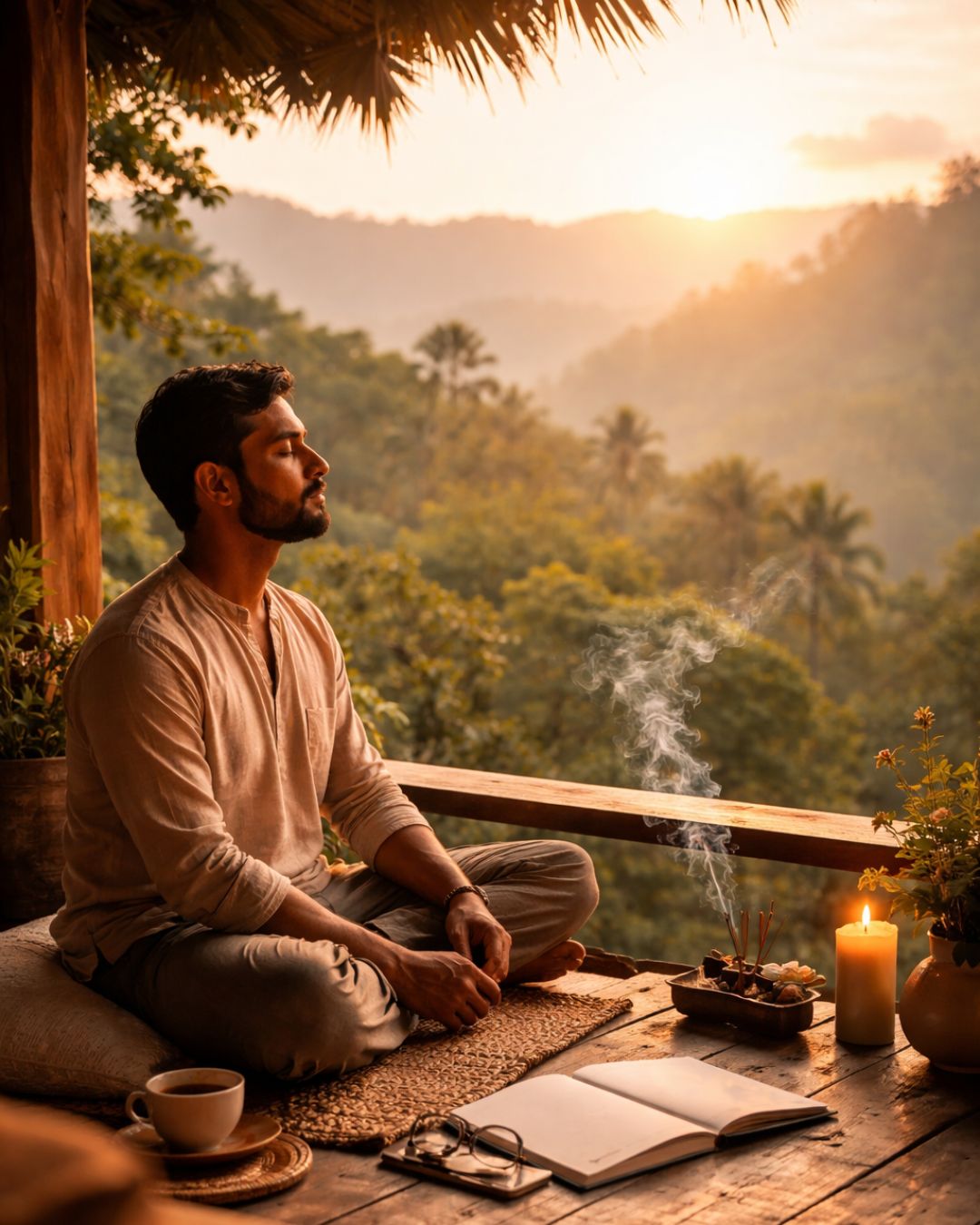
This discomfort reveals how rarely we sit with our own thoughts without distraction. Slowing down gently reintroduces quiet, not as emptiness, but as presence.
In these moments, thoughts settle, priorities surface, and emotional awareness sharpens.
Quiet is not something to escape. It is something to relearn.
The Role of Routine in a Slower Life
A slower lifestyle does not require dramatic changes. It often begins with small, repeatable rituals—morning walks, unhurried meals, consistent sleep schedules, or time set aside for reflection.
These routines act as anchors, bringing rhythm to days that would otherwise blur together.
When routines are respected, life feels less chaotic even when it is busy.
The predictability of certain moments creates a sense of safety, allowing the mind to relax without disengaging from responsibility.
Slowness thrives not in disruption, but in gentle structure.
Presence Is the Real Outcome
The true benefit of slowing down is not productivity, balance, or even calm—though all of these may follow. The real outcome is presence. Being present with conversations. With work. With rest. With one’s own internal state.
Presence transforms ordinary moments into meaningful ones. A meal becomes nourishment rather than consumption. A conversation becomes connection rather than exchange. Time stops feeling like something to outrun.
In a world obsessed with acceleration, choosing presence is a quiet form of resistance.
A Different Measure of a Life Well Lived
Success has long been measured in visible milestones—titles, numbers, timelines. But a slower perspective invites different questions. Does life feel lived, or merely completed? Is there space for reflection, or only reaction?
Slowing down does not promise a simpler life. It promises a more inhabited one—where moments are not rushed past, and meaning is not postponed.
Perhaps the most radical thing today is not doing more, but being fully where you already are.
